Mobile  |  About us  |  Photos  |  Videos  |  Subscriptions  |  RSS Feeds  |  Today's Paper  |  Classifieds  |  Contact Us
Advanced Search
The Daily Star
WEDNESDAY, 19 JUN 2013
12:17 AM Beirut time
Weather    
Beirut
25 °C
Blom Index
BLOM
1,147.9down
x
Commentary
Follow this story Print Email this RSS Feed ePaper share this
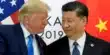
Washington will go on containing and balancing China in Asia
A+ A-

America’s strategy in Asia for more than a century has sought a stable balance of power to prevent the rise of any hegemon.

Yet the United States, according to its official National Security Strategy, is also committed to accommodating “the emergence of a China that is peaceful and prosperous and that cooperates with us to address common challenges and mutual interests.” So America’s Asia policy has in some ways been at war with itself.In fact, the U.S. has played a key role in China’s rise. For example, rather than sustain trade sanctions against China after the Tiananmen Square massacre in 1989, the U.S. decided instead to integrate the country into global institutions. But U.S. foreign policy had been notable for a China-friendly approach long before that.

In 1905, President Theodore Roosevelt, who hosted the peace conference in Portsmouth, New Hampshire, after the Russo-Japanese War, argued for the return of Manchuria to Manchu-ruled China and for a balance of power in East Asia. The war ended up making the U.S. an active participant in China’s affairs.

After the Communists seized power in China in 1949, the U.S. openly viewed Chinese communism as benign, and thus distinct from Soviet communism. And it was after the Communists crushed the pro-democracy movement in 1989 that the U.S. helped to turn China into an export juggernaut that has accumulated massive trade surpluses and become the principal source of capital flows to the U.S.

America’s policy toward Communist China has traversed three stages. In the first phase, America courted Mao Zedong’s regime, despite its 1950-51 annexation of Tibet and domestic witch hunts, such as the Hundred Flowers Campaign, the brief liberalization that many Western observers believe was a ploy designed to flush out opponents. Courtship gave way to estrangement during the second phase, as U.S. policy for much of the 1960s sought to isolate China.

The third phase began immediately after the 1969 Sino-Soviet military clashes, with the U.S. actively seeking to exploit the rift in the Communist world by aligning China with its anti-Soviet strategy. Although China clearly instigated the bloody border clashes, America sided with Mao’s regime. That helped to lay the groundwork for the China “opening” of 1970-71, engineered by U.S. National Security Adviser Henry Kissinger, who until then had no knowledge of the country.

Since then, the U.S. has pursued a conscious policy of aiding China’s rise. Indeed, President Jimmy Carter sent a memo to various U.S. government departments instructing them to help in China’s rise – an approach that remains in effect today, even as America seeks to hedge against the risk that Chinese power gives rise to arrogance.

Indeed, even China’s firing of missiles into the Taiwan Strait in 1996 did not change U.S. policy. If anything, the U.S. has been gradually loosening its close links with Taiwan, with no U.S. Cabinet member visiting the island since those missile maneuvers.

Seen in this light, China’s spectacular economic success – including the world’s largest trade surplus and foreign-currency reserves – owes much to U.S. policy from the 1970s on. Without the significant expansion in U.S.-Chinese trade and financial relations, China’s growth would have been much slower and more difficult to sustain.

Allies of convenience during the second half of the Cold War, the U.S. and China emerged from it as partners tied by interdependence. America depends on China’s trade surplus and savings to finance its outsize budget deficits, while China relies on its huge exports to the U.S. to sustain its economic growth and finance its military modernization. By plowing more than two-thirds of its mammoth foreign-currency reserves into U.S. dollar-denominated assets, China has gained significant political leverage.

China is thus very different from Washington’s previous adversaries. U.S. interests are so closely intertwined with China that a policy to isolate or confront it isn’t feasible. On the issue of democracy, the U.S. prefers to lecture other dictatorships rather than the world’s largest autocracy.

Yet it is also true that the U.S. is uneasy about China’s not-too-hidden aim to dominate Asia – an objective that runs counter to U.S. security and commercial interests and to the larger goal of securing a balance in power in Asia. To avert Chinese dominance, the U.S. has already started to build countervailing influences, without making any attempt to contain China.

For the U.S., China’s growing power actually helps to validate its forward military deployments in Asia, maintain existing allies in the region, and win new strategic partners. Indeed, an increasingly assertive China has proven a diplomatic boon for the U.S. in strengthening and expanding its Asian security relationships.

The lesson is clear: The muscle-flexing rise of a world power can strengthen the strategic relevance and role of a power in relative decline. Barely a decade ago, the U.S. was beginning to feel marginalized in Asia, owing to several developments, including China’s “charm offensive.” But now America has returned firmly to center stage.

South Korea has beefed up its military alliance with the U.S.; Japan has backed away from an effort to persuade the U.S. to move its Marine base out of Okinawa; Singapore has allowed the U.S. navy to station ships; Australia is hosting U.S. Marine and other deployments; and India, Vietnam, Indonesia, and the Philippines, among others, have drawn closer to the U.S. as well.

But no one should have any illusions about U.S. policy. Despite America’s “pivot” to Asia, it intends to stick to its two-pronged approach: seek to maintain a balance of power with the help of strategic allies and partners, while continuing to accommodate a rising China.

Brahma Chellaney is the author of “Asian Juggernaut and Water: Asia’s New Battleground.” THE DAILY STAR publishes this commentary in collaboration with Project Syndicate © (www.project-syndicate.org).

 
A version of this article appeared in the print edition of The Daily Star on September 12, 2012, on page 7.
Home Commentary


Asia pivot / China-America relations / China / United States of America
Advertisement
Around the Web
Comments  

Your feedback is important to us!

We invite all our readers to share with us their views and comments about this article.

Disclaimer: Comments submitted by third parties on this site are the sole responsibility of the individual(s) whose content is submitted. The Daily Star accepts no responsibility for the content of comment(s), including, without limitation, any error, omission or inaccuracy therein. Please note that your email address will NOT appear on the site.

comments powered by Disqus
More from
Brahma Chellaney
Asia’s scramble for resources has created an environmental crisis
Bring China in on a rule-based Asian regional water order
Does America’s Asia pivot have content?
Lessons of the China-India war resonate 50 years on
Washington must cut a vulnerable India some slack on Iran
Advertisement
Advertisement
Follow us on Facebook Follow us on Twitter Follow us on Linked In Follow us on Google+ Subscribe to our Live Feed
Multimedia
Images  
Sidon Clashes- in pictures
The Lebanese Army deployed Tuesday in Abra, an eastern suburb of the southern city of Sidon, after clashes between supporters of Sheikh Ahmad Assir and the Resistance Brigades, a pro-Hezbollah group, that claimed the life of one resident.
View all view all
Advertisement
Rami G. Khouri
Rami G. Khouri
Apocalyptic words from men in hiding
Michael Young
Michael Young
Abandon privacy, the NSA tells America
David Ignatius
David Ignatius
Bolstering moderates must be America’s Mideast priority
View all view all
Advertisement
cartoon
 
Click to View Articles
 
 
News
Business
Opinion
Sports
Culture
Technology
Entertainment
Privacy Policy | Anti-Spamming Policy | Disclaimer | Copyright Notice
© 2013 The Daily Star - All Rights Reserved - Designed and Developed By IDS